

A chat window
One thread, one voice, flat price, but you still assign every task.
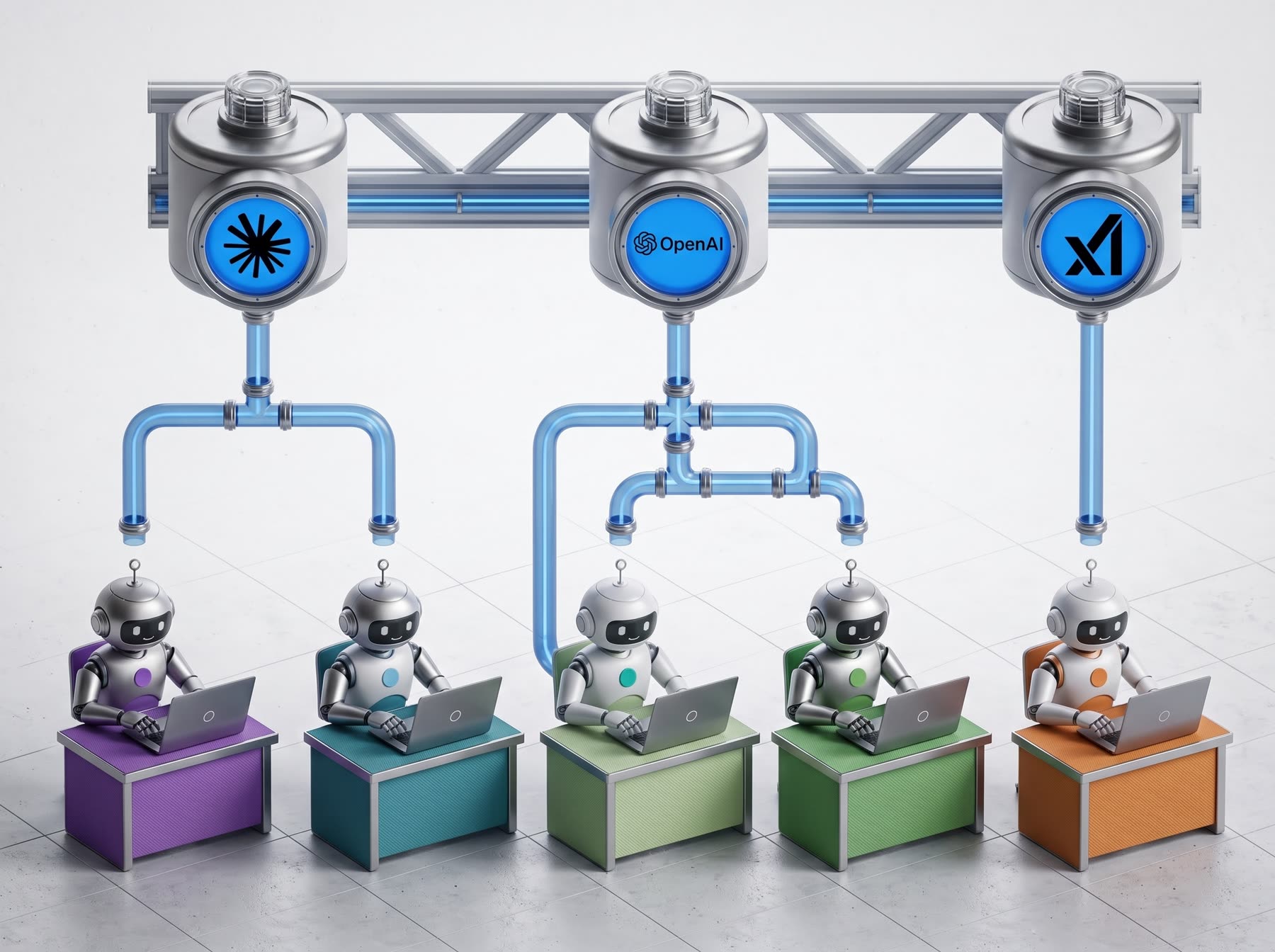
We set up your own always-on agents with you. Each one gets its own account and its own job, and its tokens come from the Claude, SuperGrok or ChatGPT plan you already own. Never a metered API key.
The agent products winning right now meter the work: credits, compute units, token overage on top of the subscription, and a usage window that parks your agents when you need them most.
So you get two ways to lose. Pay the meter. Or watch your agents stand in line, hands out, while the window counts down.

The usage window
Wait 5 more hours.
That number is not drama, it is list price. An always-on agent carries a big working context on every turn. At today's published prices for a top-tier model ($5 per million tokens in, $25 out), a working turn runs $0.55 to $2.05, and an agent doing 30 to 90 turns a day costs $17 to $185 a day on a metered key. Put five or six of them to work and the fleet can cross $1,000 a day.
On a subscription you already pay, Claude Max from $100 a month, SuperGrok $30, ChatGPT plans from $20, the same turns cost nothing extra on top of the plan's flat price. The plan is the ceiling.
a busy agent-month, metered at list
the flat plan it runs on instead
| Per | Metered API at list price | A subscription you already own |
|---|---|---|
| List price, per 1M tokens | $5 in / $25 out | included in the flat plan |
| A working turn | $0.55 to $2.05 | $0 extra |
| An agent-day, 30 to 90 turns | $17 to $185 | $0 extra |
| A month, per agent | $500 to $5,500 | the plan's flat price: Claude Max from $100, SuperGrok $30, ChatGPT from $20 |
Sources: claude.com/pricing, x.ai/pricing, help.openai.com. Prices as of August 2026.
KM BOT itself is a flat price, quoted on the 15-minute call. Never per token.
The meter is an API-list-price equivalent of tokens actually run, not money withdrawn from anyone's account. Subscriptions have their own fair-use windows.
What did your last API invoice say?
Claude, ChatGPT, SuperGrok. One of each, or three Claude plans and a SuperGrok. Every plan you add is more fuel in the pool, and one plan fuels several agents at once.
Define roles and talk to your people in Agents mode, or watch the projects move across a board in Board mode. Same fleet, two views, switch any time.
Agents modeTalk to your people
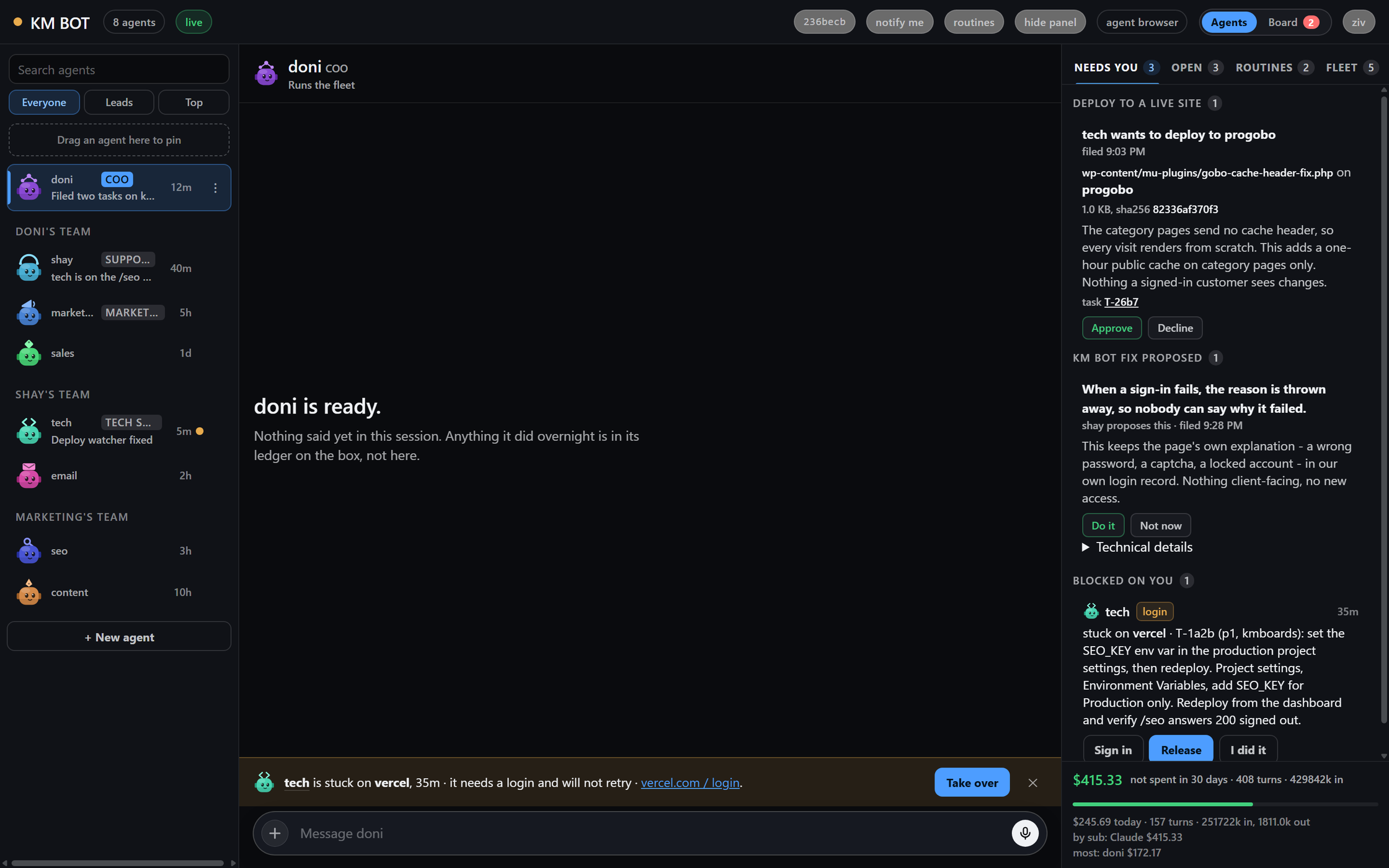
Your agents by team on the left, one conversation in the middle.
Board modeWatch the work move
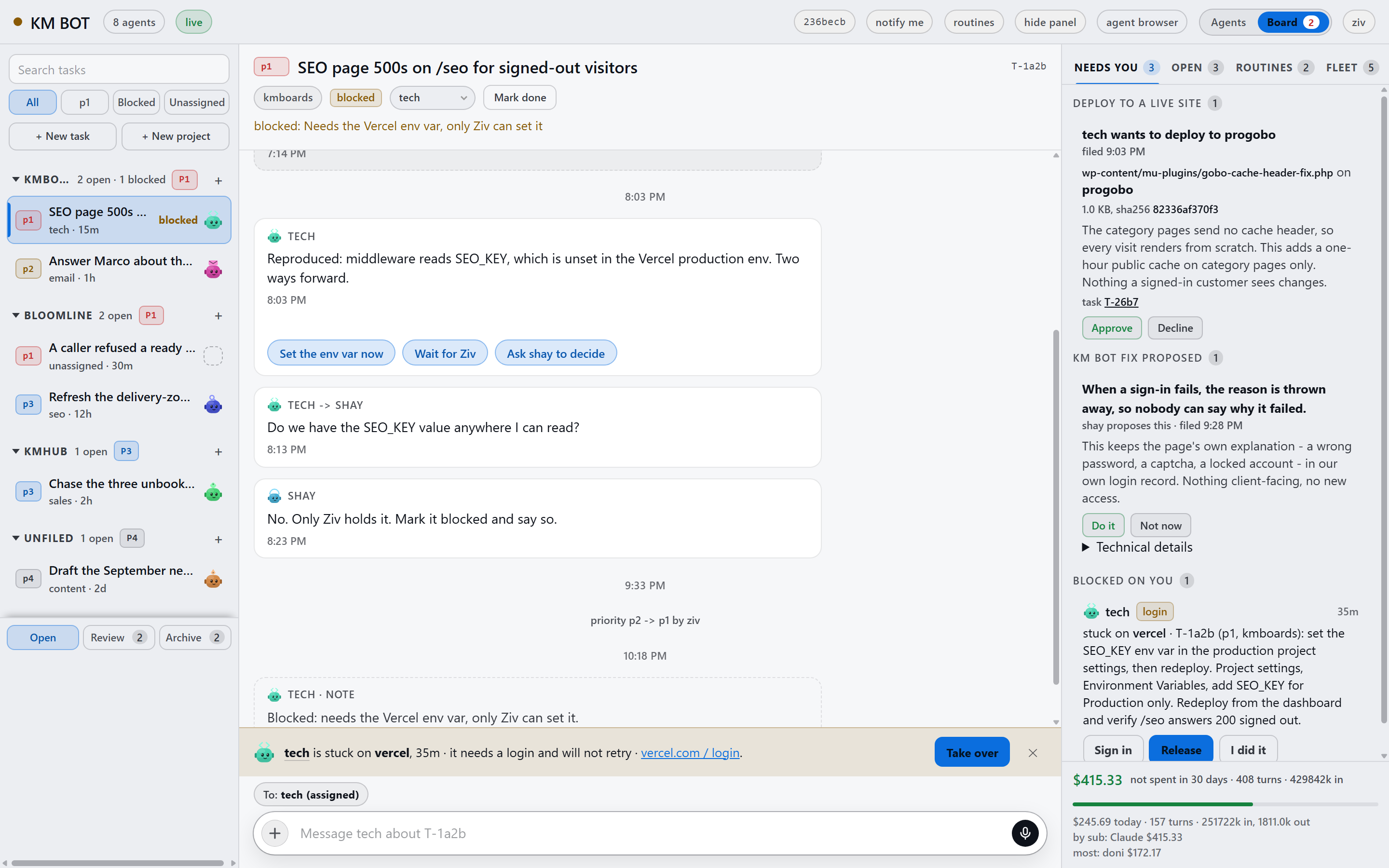
The same fleet by project and task, with who holds each one.
They share one server the way a team shares an office: each agent works under its own account, with its own memory, its own files, its own browser. Not one shared login for everybody. One mistake stays in one room. And when a job lives in your own logged-in session, the agent can drive your browser while you watch.
Keep scrolling. Each one takes over the whole screen.
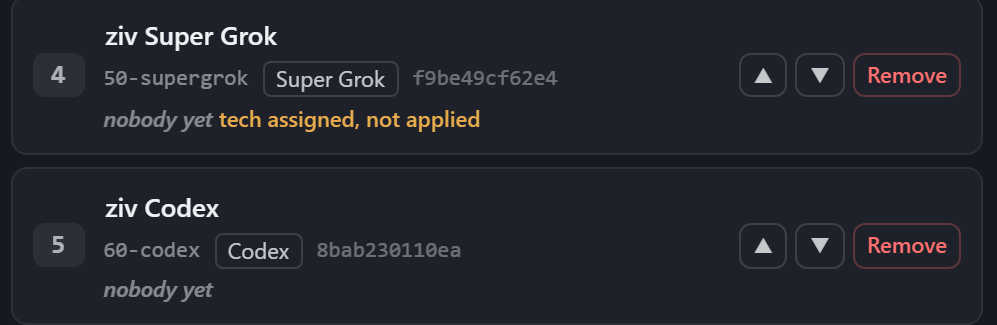
The pool holds your flat plans. You decide which plan fuels which agent, move them any time, and spread the load with one click.
The pool: flat plans in, agents assigned out.
Per agent: the model tier and the thinking effort. Your researcher can think at max while your inbox sorter stays quick and light. On a voice call it can use a faster model.
Model, model on calls and thinking effort, set per agent.
Filter the roster to Everyone, Leads or Top. Ask one agent about one job, ask a team lead about their whole team, or ask your top management how the week went.
One roster, three filters: Everyone, Leads, Top.
Press Talk and speak to Doni, your COO agent, the way you would on a phone call. Ask about any open ticket, give instructions, and keep talking while the work runs.
What you agree on the call is handed to the right agent.
When an agent spots something in KM BOT that could work better, it files the fix in plain words: what goes wrong today, and what changes. You say Do it, or Not now.
Fixes written by the fleet, for the fleet.
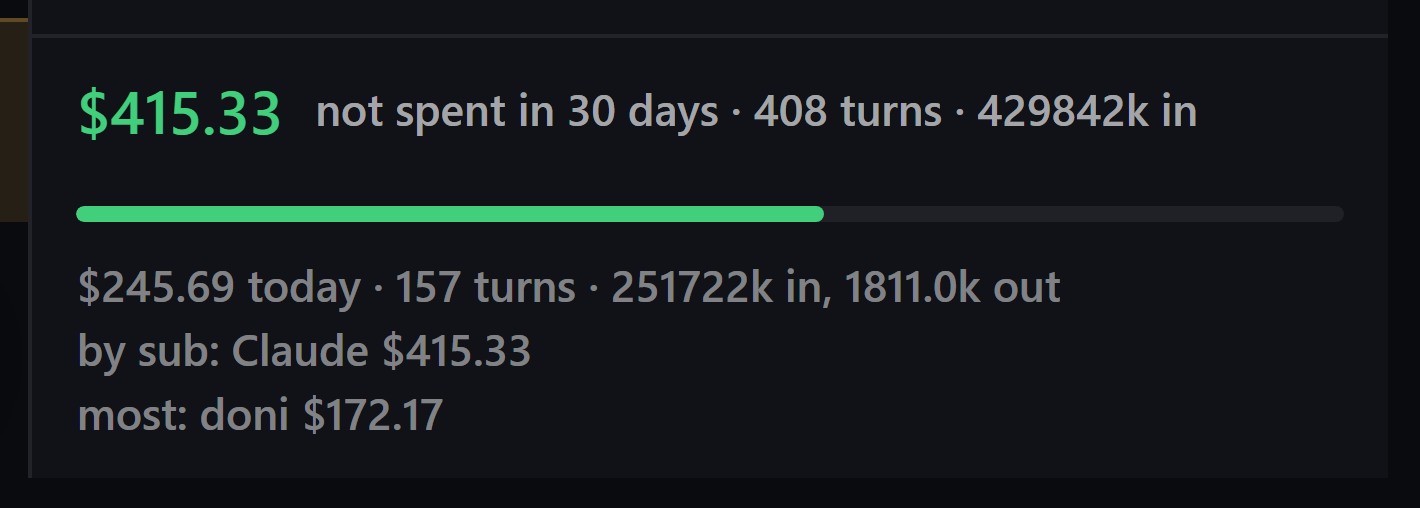
Every turn is priced at what it would have cost on the metered API, at public list prices, and shown on a meter: by day, by subscription, by agent.
The meter: what today's turns would have cost at list.
Your agents can work every day of the month and the bill does not move. You pay the flat plans you already own, and the plan is the ceiling.
A busy month. The same flat bill.
What it types with: chat replies, and anything it types into your sessions. Haiku is fast and cheap for an agent that mostly drives tools.
Model on callsWhat it talks with on a voice call. Haiku answers fastest.
Thinking effortA spoken conversation with Doni. Ask about any open ticket, give instructions, and keep talking while the work runs.
You: Where are we on the venue quote?
Doni: Sales drafted it this morning. I will have them send you the final version to check.
✓ Handed to sales on the call
Now the agent ends the call when you clearly ask it to, and never on its own. Touches only how voice calls end.
This keeps the reason, a wrong password, a captcha, a locked account, in our own login record. No new access.
Turns run: 0. Extra charged: $0
Message an agent from your phone the way you message a person. A DM that starts with its name reaches it; the acknowledgement lands in seconds, and the result follows as its own message.
KM BOT's agents get you immediately.
From a real incident on our own fleet, retold the way you would type it. The first reply landed seven seconds after send.

Ask on WhatsApp from the car. Open the app at your desk. Pick the thread up in the browser at night. It is the same agent, the same session, the same memory, mid-thought.
There is no "let me catch you up". It was there.
An MFA code, a purchase, a login wall. The turn ends with a ticket at your door and the reason in plain words. Nothing fails quietly, and nothing guesses a password.
Pick an agent and switch on only what it may reach. Anything outside its list stops and asks you.

The console on this page is the one we run our own company on, every day. Yours can start with one agent and grow to any size, one flat plan at a time.
Bring one real task to the call. We hand it to an agent while you watch, on a plan you already pay.
Book 15 minutesOne thread, one voice, flat price, but you still assign every task.
A weekly allowance, with overage billed by the token, and every agent on one machine with one set of logins. Its own docs tell you not to treat the agents as a security boundary.
Your agents, separate accounts each, running on flat subscriptions pooled behind a router. A blocked task waits at your door instead of failing quietly, and the meter shows what those turns would have cost at public API list prices.
Tell us what is breaking. When the note arrives, the calendar opens.
On the call we do the whole first setup together: